

The world of artificial intelligence is experiencing another major leap forward in 2025. Tech giants and research labs have released a new generation of large-scale AI models and multimodal tools that are changing the way people work, create, and communicate. These powerful systems can understand and process text, images, audio, and even video together — unlocking new possibilities across industries like education, healthcare, design, and entertainment.
Leading the charge are global technology companies such as OpenAI, Google DeepMind, Anthropic, and Meta, each unveiling advanced multimodal AI systems this year. These models go far beyond traditional chatbots — they can analyze photos, generate videos, write complex code, and respond with realistic voices. OpenAI’s latest release, for instance, allows users to combine text, visuals, and audio in a single conversation, making communication more natural and dynamic. Similarly, Google’s Gemini and Meta’s latest Llama versions have introduced integrated reasoning abilities, helping users perform complex tasks more efficiently.
The biggest advancement lies in multimodality — the ability of AI to handle different types of data at once. This technology is transforming creative fields. Designers can now describe an idea in words and instantly generate detailed visuals. Musicians are experimenting with AI tools that compose music based on emotional tone or lyrical input. Video creators can produce lifelike scenes using only text prompts. These breakthroughs are making advanced creativity accessible to everyone, not just professionals.
In business and industry, large-scale AI models are becoming key partners in decision-making and productivity. Multimodal systems can now analyze market trends through graphs, reports, and images together — giving more complete insights than ever before. In healthcare, AI can combine medical images and patient histories to help doctors make faster and more accurate diagnoses. In education, personalized AI tutors can explain lessons using text, speech, and visuals, making learning more interactive and engaging.
However, the rapid rise of these advanced systems also brings new challenges. Concerns about data privacy, misinformation, and deepfakes are growing as AI becomes more powerful. Experts are calling for stronger regulation and transparency to ensure these tools are used responsibly. Many companies are now introducing watermarking and safety filters to prevent misuse, but global laws still need to catch up with the pace of innovation.
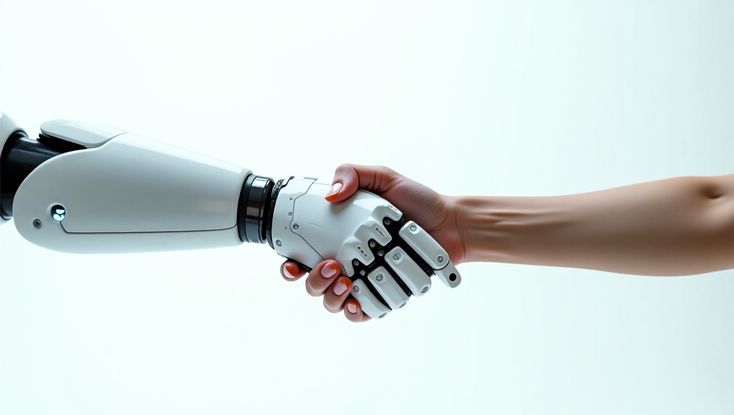
Despite these concerns, 2025 is shaping up to be a milestone year for artificial intelligence. The new generation of large-scale multimodal models is breaking barriers between humans and machines. What once seemed futuristic — like speaking to an AI that can see, hear, and understand the world — is now a daily reality.
The focus is shifting from what AI can do to how it can be used to improve lives. As multimodal tools become part of workplaces, classrooms, and creative studios, they are reshaping the future of human-AI collaboration. This revolution marks the beginning of an era where technology doesn’t just assist — it truly understands.