
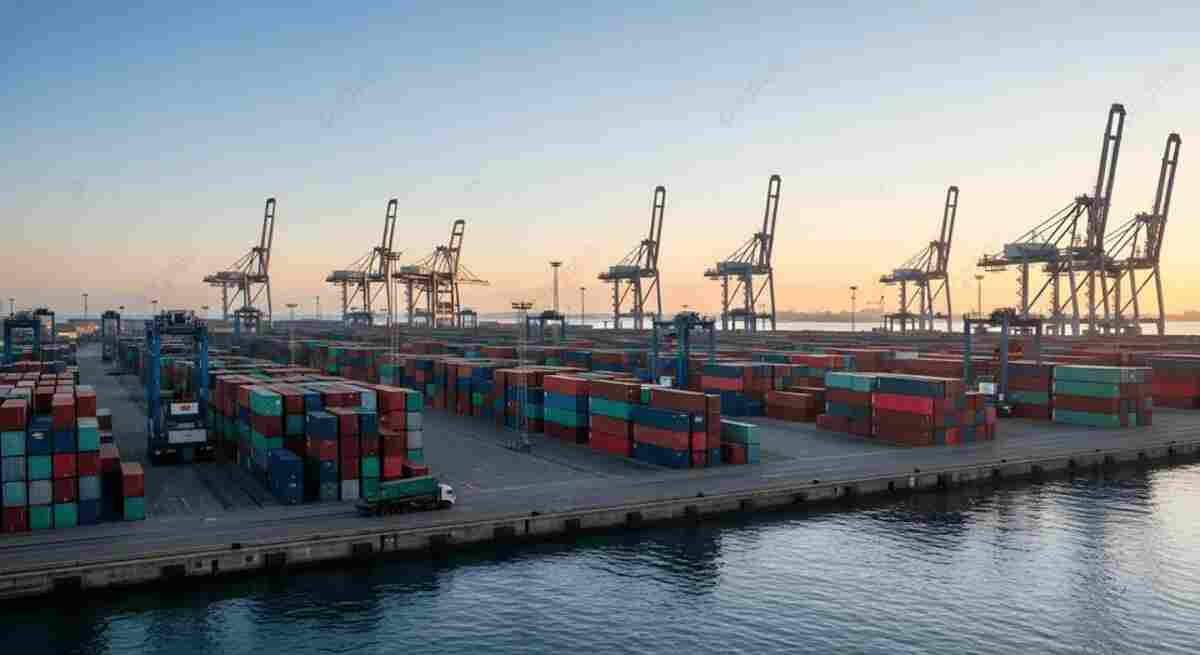

Global supply chains are facing a new wave of disruptions, forcing companies around the world to rethink how goods move from factories to consumers. Shipping delays, geopolitical tensions, and rising transportation costs are exposing vulnerabilities in logistics networks that many companies once considered stable. As these challenges intensify, businesses are shifting their focus from cost efficiency to long-term resilience.
Recent developments highlight how fragile international logistics can be. Escalating tensions in the Middle East have disrupted critical air cargo routes and maritime shipping channels. Flights through major hubs such as Doha and Dubai have been grounded or rerouted, causing global air cargo capacity to drop significantly and leaving shipments ranging from electronics to airplane parts stranded in transit. At the same time, major logistics companies have temporarily suspended cargo bookings in parts of the region as security risks and insurance concerns rise, further complicating global trade flows.
These disruptions are not isolated incidents. Experts say the global logistics system has entered an era of constant volatility where supply chain shocks occur more frequently and with greater impact. According to industry research, geopolitical tensions, regulatory changes, and labor shortages are reshaping how global trade operates and forcing companies to redesign their supply networks.
For businesses that rely on complex international supply chains, even small disruptions can trigger major consequences. A delayed shipment of raw materials can halt production lines, while shipping congestion at major ports can lead to product shortages and rising prices. The interconnected nature of modern logistics means disruptions in one region can quickly ripple across the global economy.
In response, companies are adopting new strategies aimed at strengthening supply chain resilience. One major shift involves diversifying suppliers and manufacturing locations. Instead of relying on a single region or supplier for key components, businesses are spreading production across multiple countries. This approach reduces the risk that a political crisis, natural disaster, or transportation bottleneck in one location will stop operations entirely.
Another strategy gaining momentum is increasing visibility across supply networks. Companies are investing in digital technologies such as artificial intelligence, predictive analytics, and real-time tracking tools. These systems allow logistics managers to monitor shipments, anticipate delays, and reroute goods quickly when disruptions occur. Modern AI systems can analyze massive amounts of supply chain data to forecast demand and identify potential bottlenecks before they become major problems.
Inventory strategies are also evolving. For decades, many companies followed “just-in-time” manufacturing models that minimized inventory to reduce costs. However, recent disruptions have exposed the risks of operating with minimal stock. As a result, many manufacturers are building safety inventory buffers for critical components, ensuring that production can continue even if shipments are delayed.
Governments and international organizations are also paying closer attention to supply chain resilience. Global forums and trade organizations are working to strengthen coordination between countries, promote resilient infrastructure investments, and develop faster crisis-response systems that keep essential goods moving during emergencies.
Despite these efforts, the challenges facing global supply chains are unlikely to disappear anytime soon. Industry data shows that supply chain disruption events have increased dramatically in recent years, driven by geopolitical conflicts, climate-related disasters, cyber threats, and economic shifts. For many businesses, the question is no longer whether disruptions will occur, but how prepared they are to handle them.
The changing landscape is pushing companies toward a new philosophy in logistics. Instead of designing supply chains purely for efficiency and cost reduction, businesses are prioritizing flexibility, redundancy, and real-time visibility. This transformation is reshaping global trade and creating a new generation of supply networks built to survive uncertainty.
As the world becomes more interconnected and unpredictable, resilient supply chains are becoming one of the most important competitive advantages a company can have. Businesses that adapt quickly to this new reality may not only survive the disruptions of global trade but emerge stronger in an increasingly complex economic environment.